


Book Summary & Review
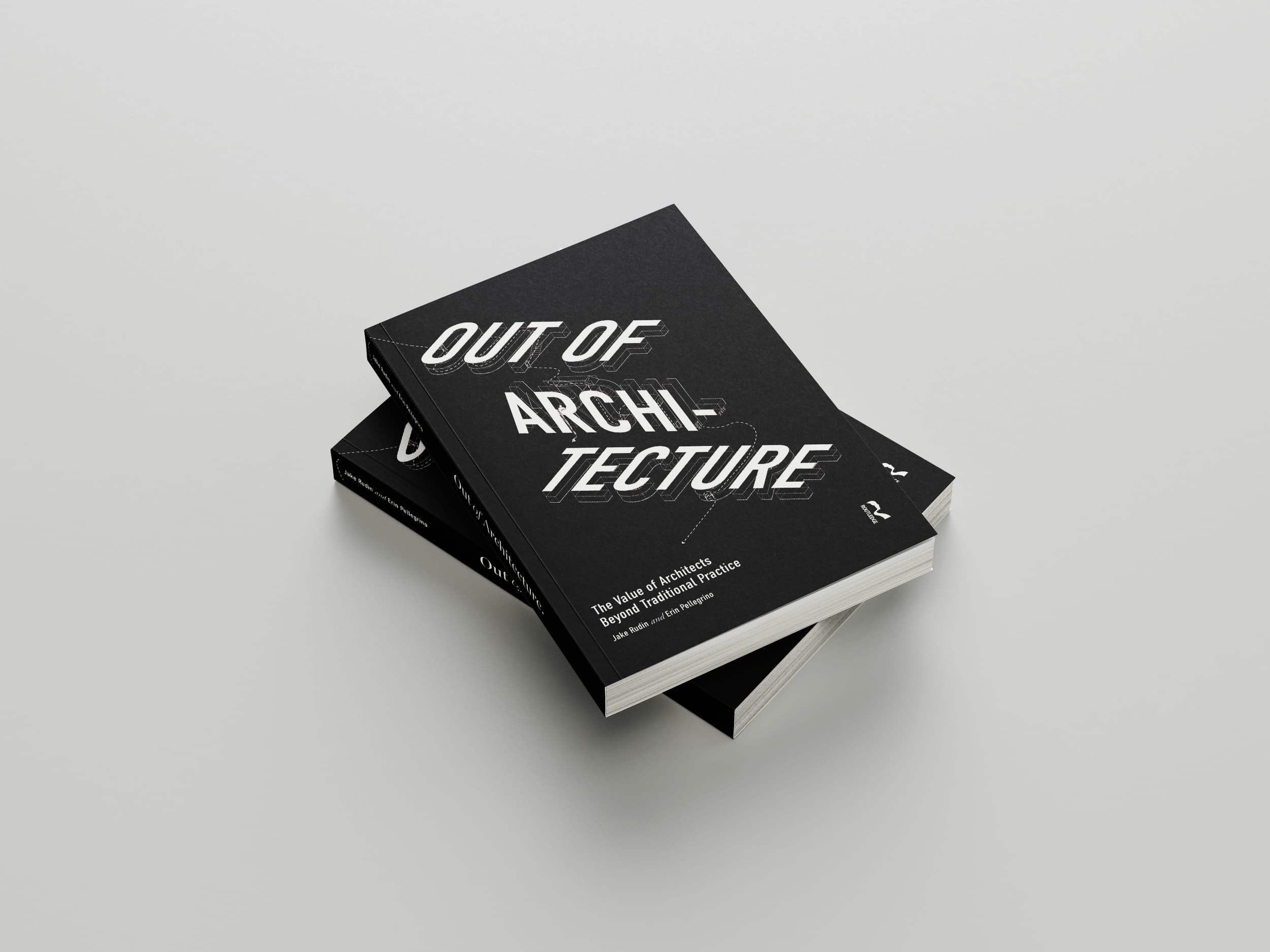
Out of Architecture, 1st Edition: Complete Book Summary
By Jake Rudin & Erin Pellegrino · Published 2023 ·
Out of Architecture is a career guide for architects, engineers, and design professionals who feel undervalued, underpaid, or creatively stifled inside traditional practice. Written by Harvard-educated designers Jake Rudin and Erin Pellegrino, the book diagnoses why architectural training produces exceptional thinkers whose skills are chronically underutilized — and provides a concrete, three-part framework for redesigning your career.
- Format: 14 chapters across 3 parts, plus an Introduction and Conclusion
- Core argument: Architectural training is broadly transferable — the profession systematically fails to communicate that value
- Primary audience: Architecture students, licensed architects, engineers, and allied design professionals considering a career transition
- Central framework: Your career is a design problem — and designers are uniquely equipped to solve it
- Authors: Jake Rudin and Erin Pellegrino, founders of Out of Architecture and Harvard Graduate School of Design alumni
What the Book Argues
The central thesis of Out of Architecture is that there is a structural and cultural disconnect between the skills architects develop and the compensation, recognition, and career opportunities they receive. The book argues across three interconnected claims:
- 1. Architectural training produces broadly transferable skills. Architects learn systems thinking, spatial reasoning, project management, client communication, visualization, and iterative problem-solving — skills that are highly valued across technology, product design, real estate development, consulting, manufacturing, and many other industries.
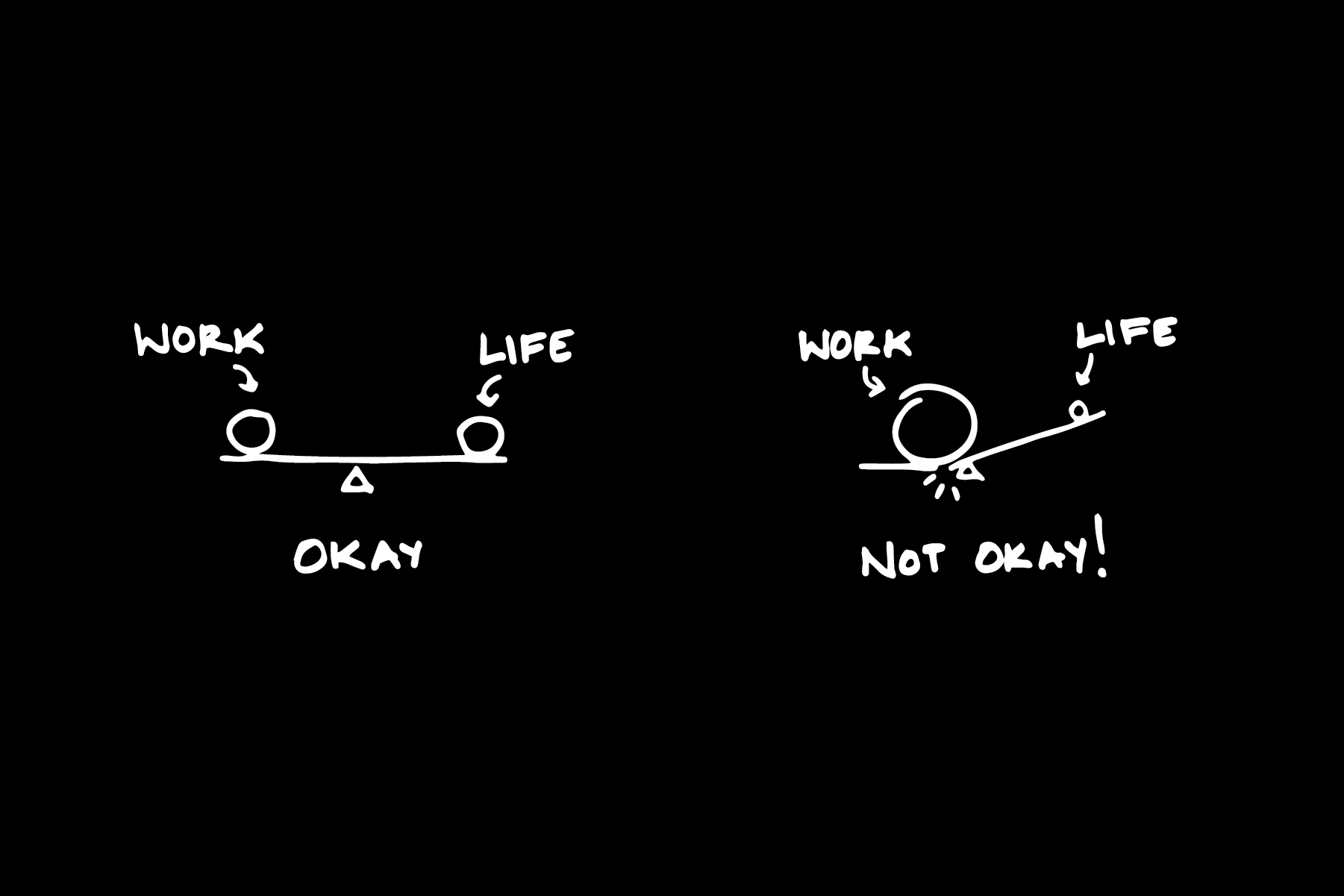
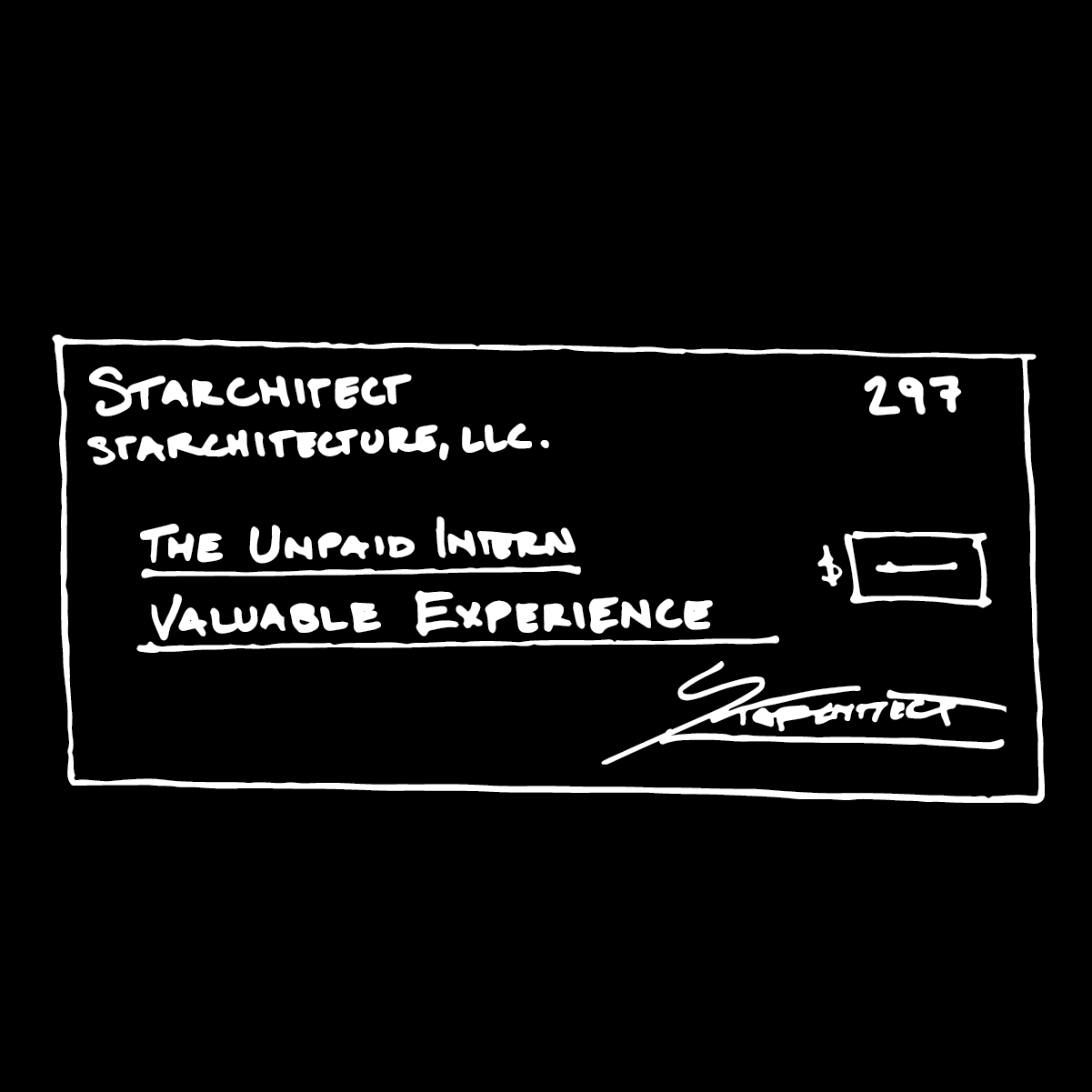
- 2. The profession systematically devalues those skills. Through a culture of "passion over pay," long hours as a badge of honor, opaque hierarchies, and the identity politics of architectural licensure, the profession conditions practitioners to accept conditions they would not tolerate in any other field.
- 3. Career design is itself a design problem. Using the tools, frameworks, and iterative mindset that architects already possess, practitioners can identify the roles, industries, and environments where their skills will be properly valued — and execute a transition with intention.
Key Insight
The book does not argue that architects should abandon the profession. It argues that architects should have full knowledge of their options — including roles inside architecture, adjacent to it, and entirely outside it — so that staying is a deliberate choice rather than a default.
Chapters 1–4
Part One: The Disconnect
Part One establishes why so many architects feel unfulfilled despite entering the profession with genuine passion. Rudin and Pellegrino trace the arc from idealized aspiration to professional disillusionment, documenting the structural forces that produce it.
Chapter 1 — Love At First Sight
The book opens by examining why people fall in love with architecture in the first place — the romance of drawing, building, and shaping the physical world. Rudin and Pellegrino argue this initial love is genuine, but that it is systematically misdirected toward a narrow definition of what "doing architecture" means. The chapter defines the gap between what architecture promises at the point of entry and what it typically delivers.
Chapter 2 — An Education
Architecture school is analyzed not just as technical training but as a culture-shaping institution. The authors draw on research showing that architecture programs demand more contact hours than almost any other full-time degree program, conditioning students to normalize overwork before they enter the workforce. The chapter questions whether this preparation serves the student or the profession's self-image.
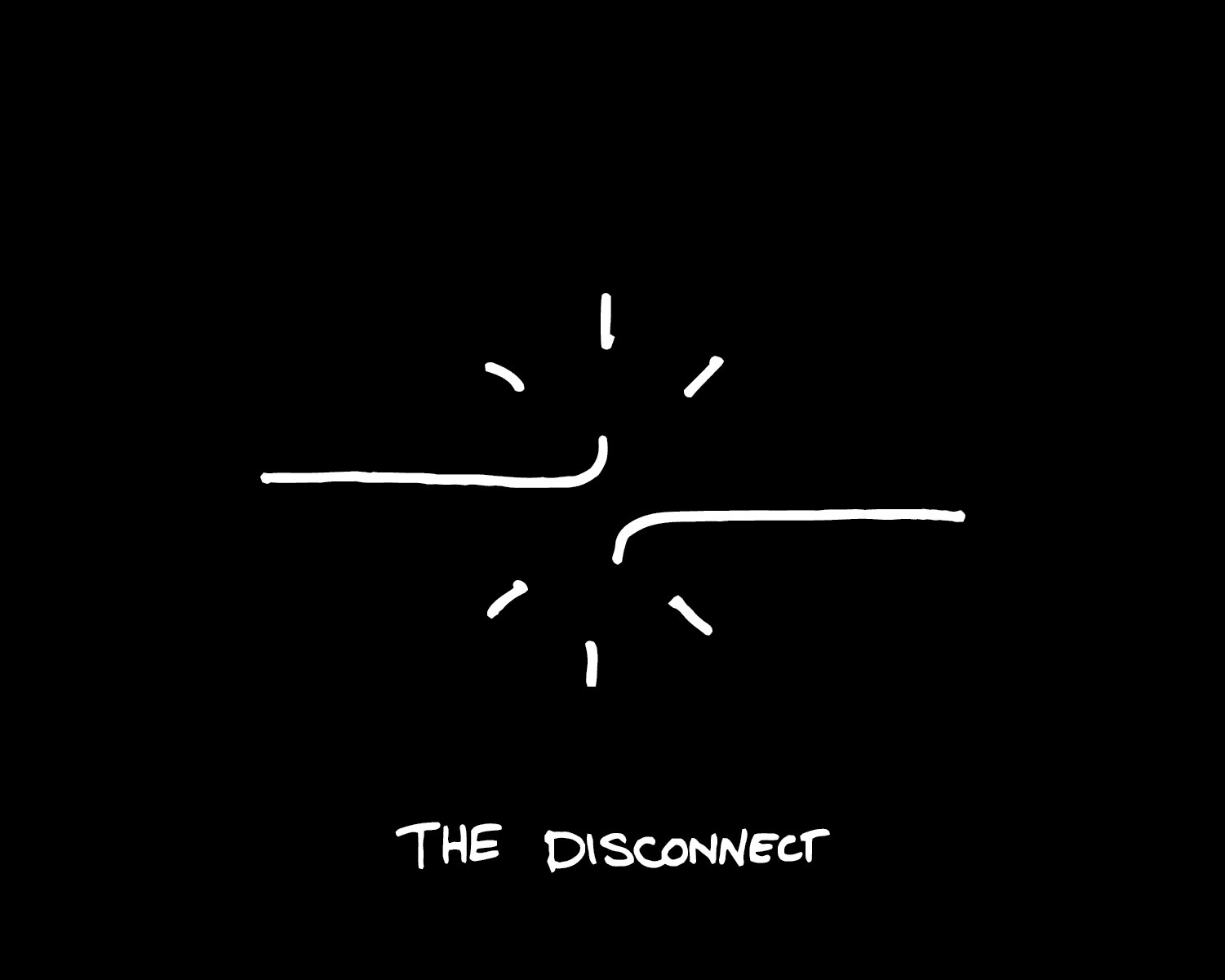
Chapter 3 — The Disconnect
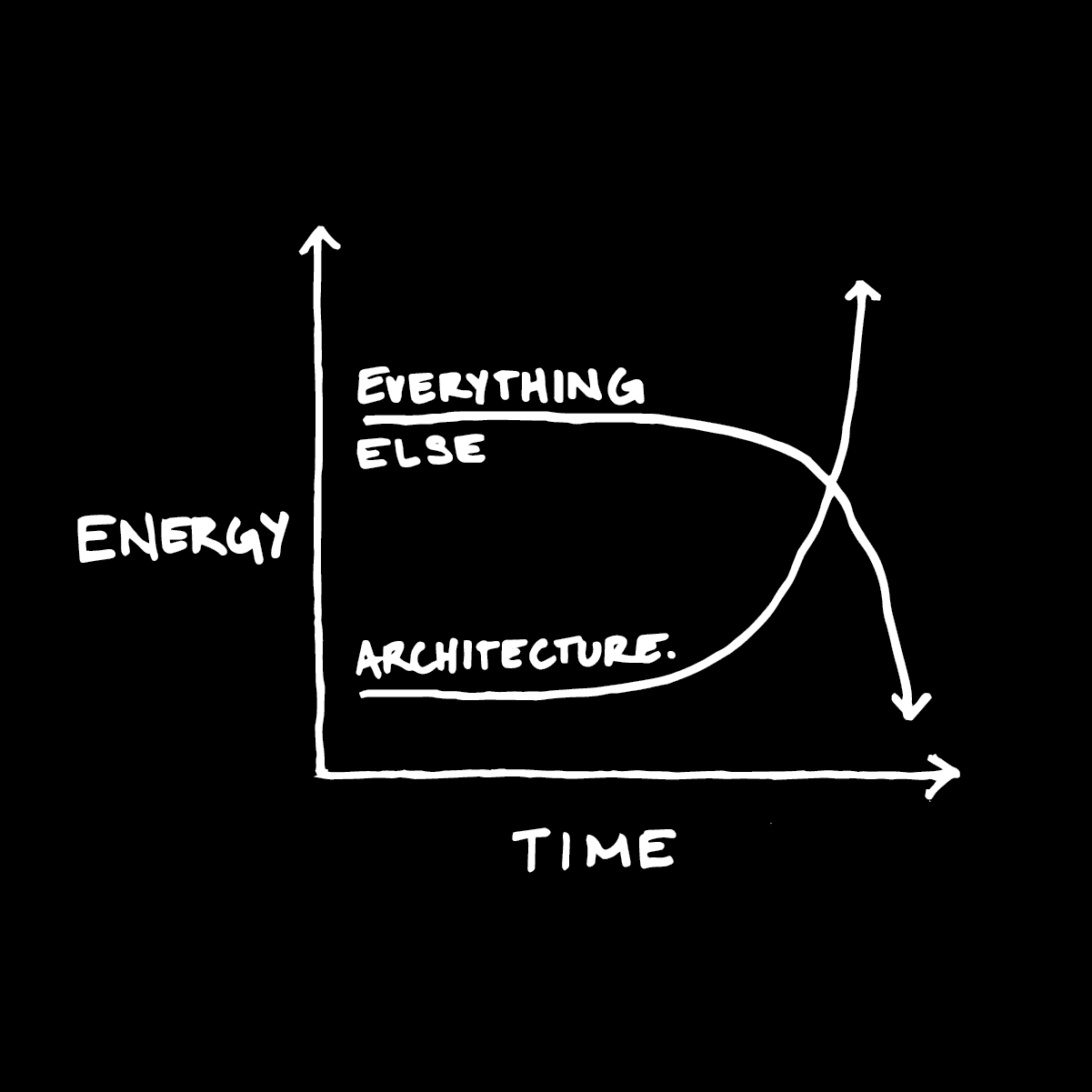
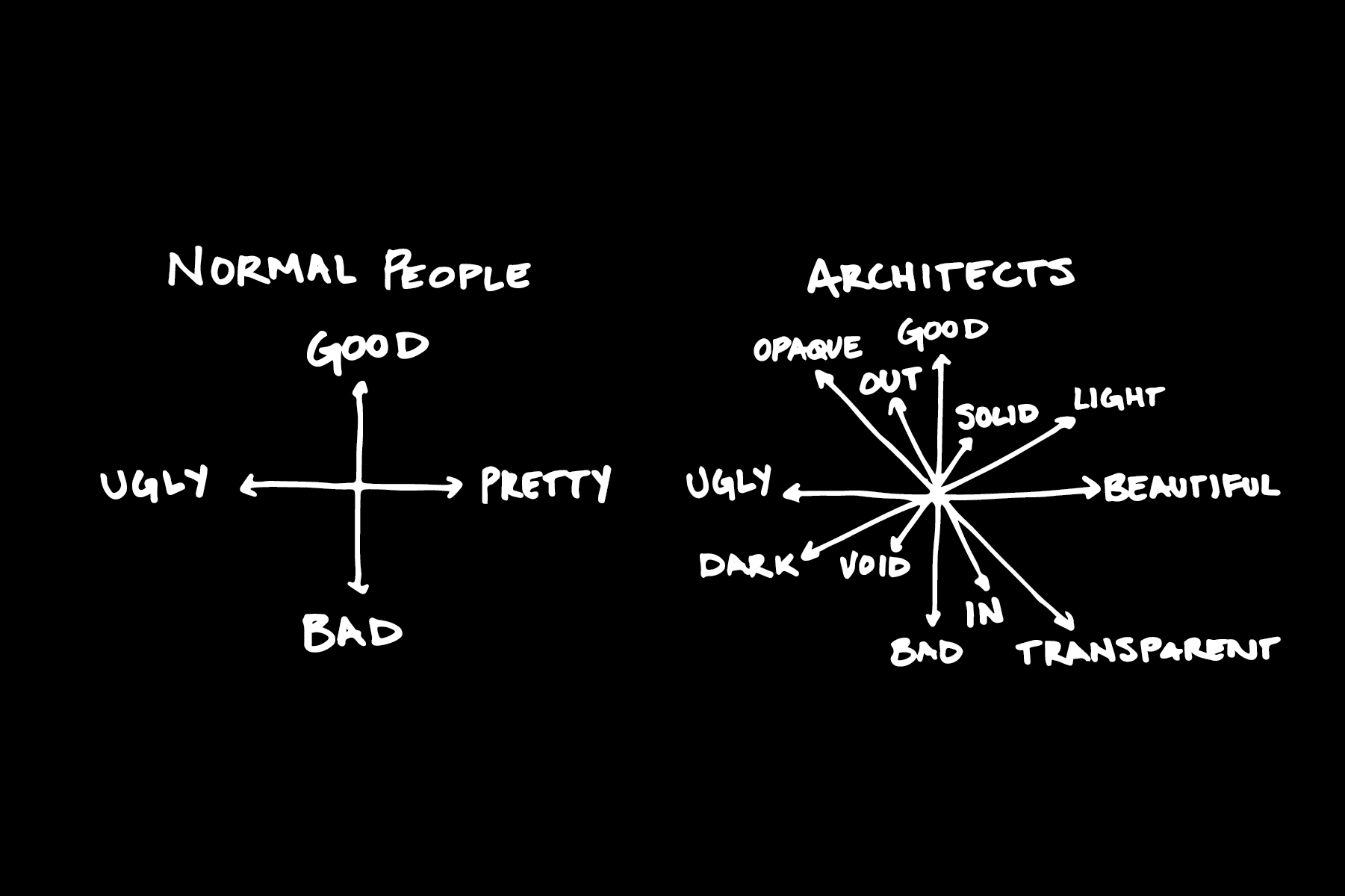
This chapter names the central problem directly: the gap between the complexity of what architects do and how poorly that work is understood, compensated, and recognized by the public and adjacent industries. The authors cite research from the Architects' Journal showing most people cannot accurately describe what architects do, and connect this perception problem to structural salary suppression across the profession.
Chapter 4 — When the Dream Becomes a Nightmare
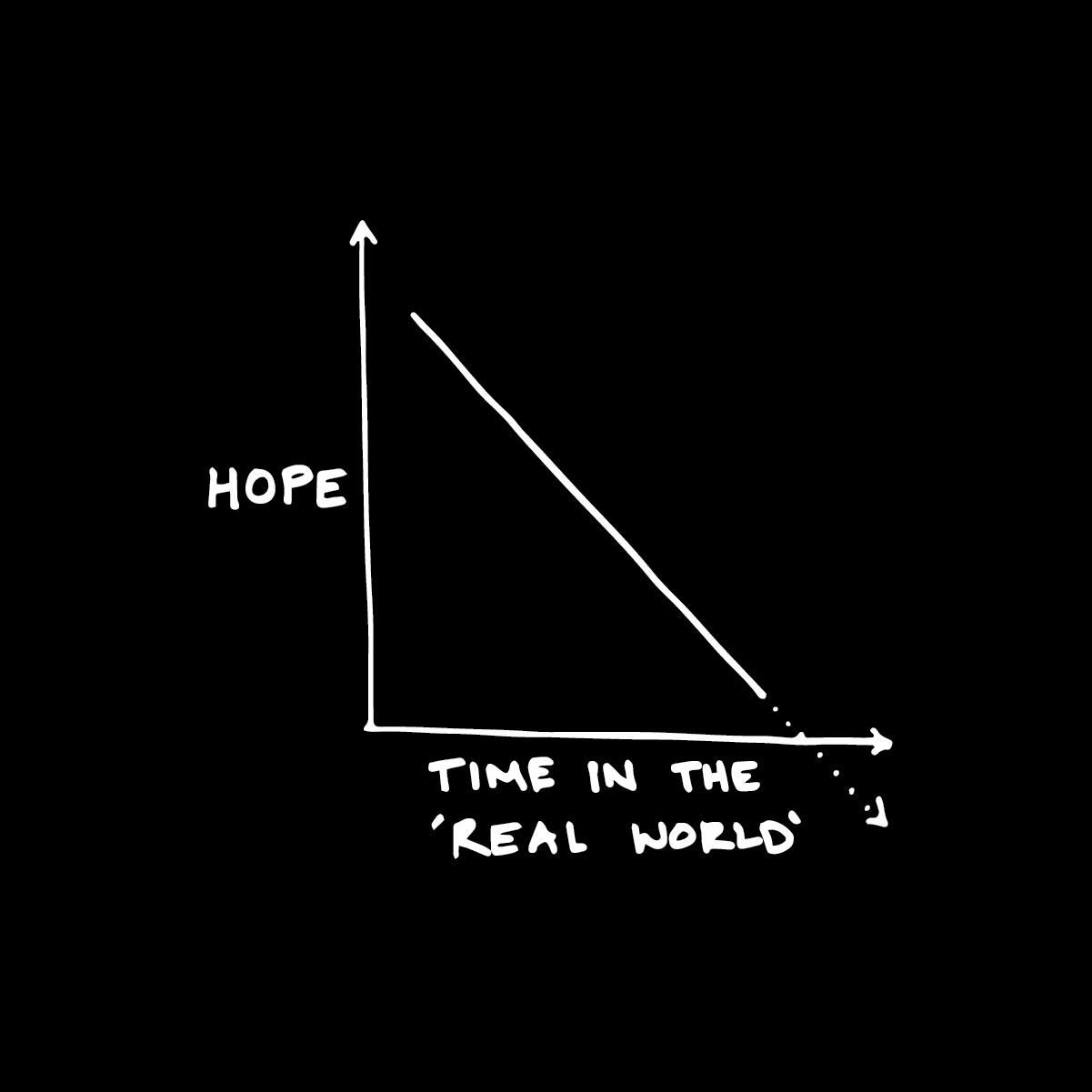
Part One closes by documenting what happens when the romance of architecture collides with the reality of practice: crushing debt from extended education, compensation that lags other licensed professions, and a culture where questioning the conditions is treated as a failure of passion. The authors use Harvard Business Review research to demonstrate that long working hours do not produce better outcomes — they produce burnout.
Key Insights — Part One
- Architecture school contact hours exceed those of most other full-time professional degree programs, conditioning overwork as a norm before graduates enter the workforce.
- A majority of the general public cannot accurately describe what architects do — a perception gap that directly suppresses the market rate for architectural services and salaries.
- The feeling of disillusionment is not a personal failure; it is a predictable outcome of systemic conditions the profession has built and sustained.
Chapters 5–9
Part Two: Why Is It Like This?
Part Two moves from diagnosis to structural explanation. Each chapter examines a distinct cultural and organizational force that perpetuates the conditions described in Part One. The authors use a series of professional archetypes — recognizable characters from architecture firm culture — to make abstract structural analysis tangible and personal.
Chapter 5 — Welcome To the Family
Architecture firms, Rudin and Pellegrino argue, frequently function more like families than professional organizations — with all the loyalty, obligation, guilt, and dysfunction that implies. The "family" framing is used to discourage employees from asking market-rate questions, setting boundaries around their time, or pursuing outside opportunities. This chapter draws on sociological research on professional culture and workplace identity.
Chapter 6 — Perfect Gentlemen
This chapter examines the gendered history of the architectural profession — how the image of the architect as a singular, heroic (and historically male) creative genius was constructed, and how that image continues to shape firm cultures, hiring, and whose work is valued. The authors reference reporting from Dezeen and academic histories of the profession, including Mary N. Woods's From Craft to Profession.
Chapter 7 — The Insecure Overachiever
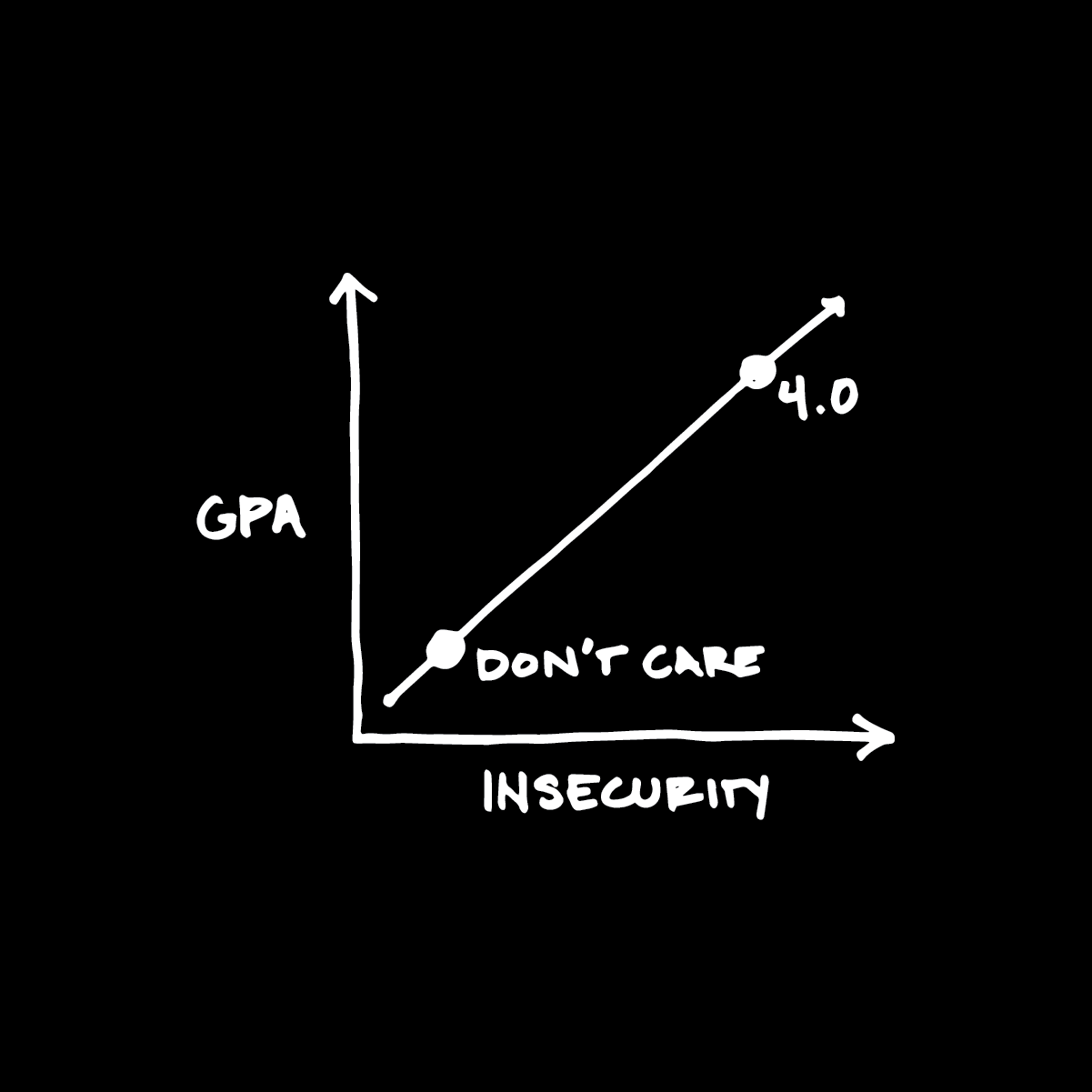
Drawing on the organizational psychology literature, this chapter profiles the psychological type that architecture schools and firms most reliably recruit and reward: someone who ties their self-worth to professional achievement and is therefore highly susceptible to exploitation through appeals to prestige, legacy, and craft. The insecure overachiever works extremely hard for external validation and is reluctant to leave or push back for fear of losing their identity.
Chapter 8 — Imploding Teams
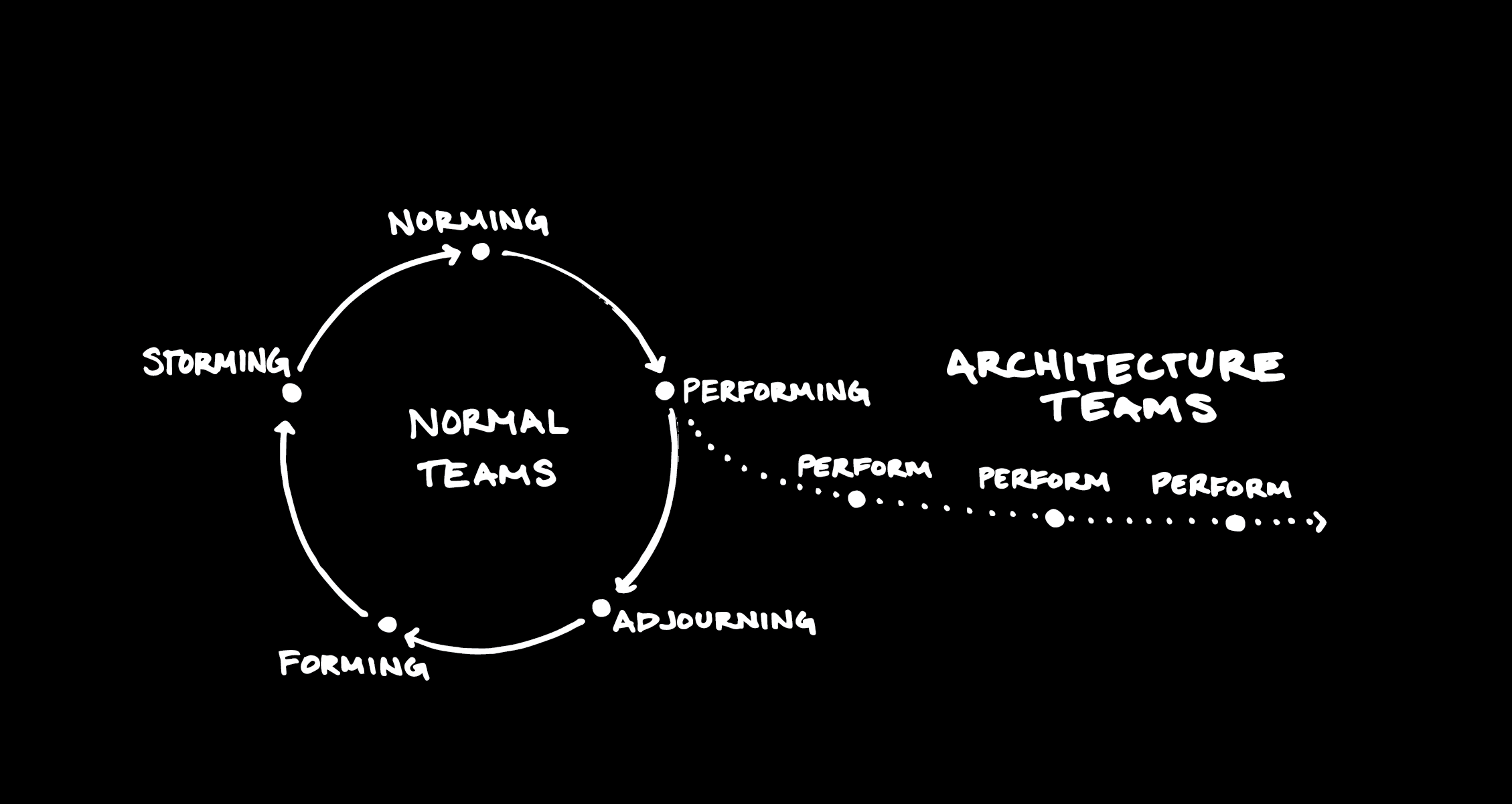
Rudin and Pellegrino apply Bruce Tuckman's stages of group development — forming, storming, norming, performing, and adjourning — to the project team structures common in architectural practice. The chapter argues that many architecture firms never reach the performing stage because they fail to invest in team development, resulting in chronic dysfunction that burns out talented people and drives them to leave.
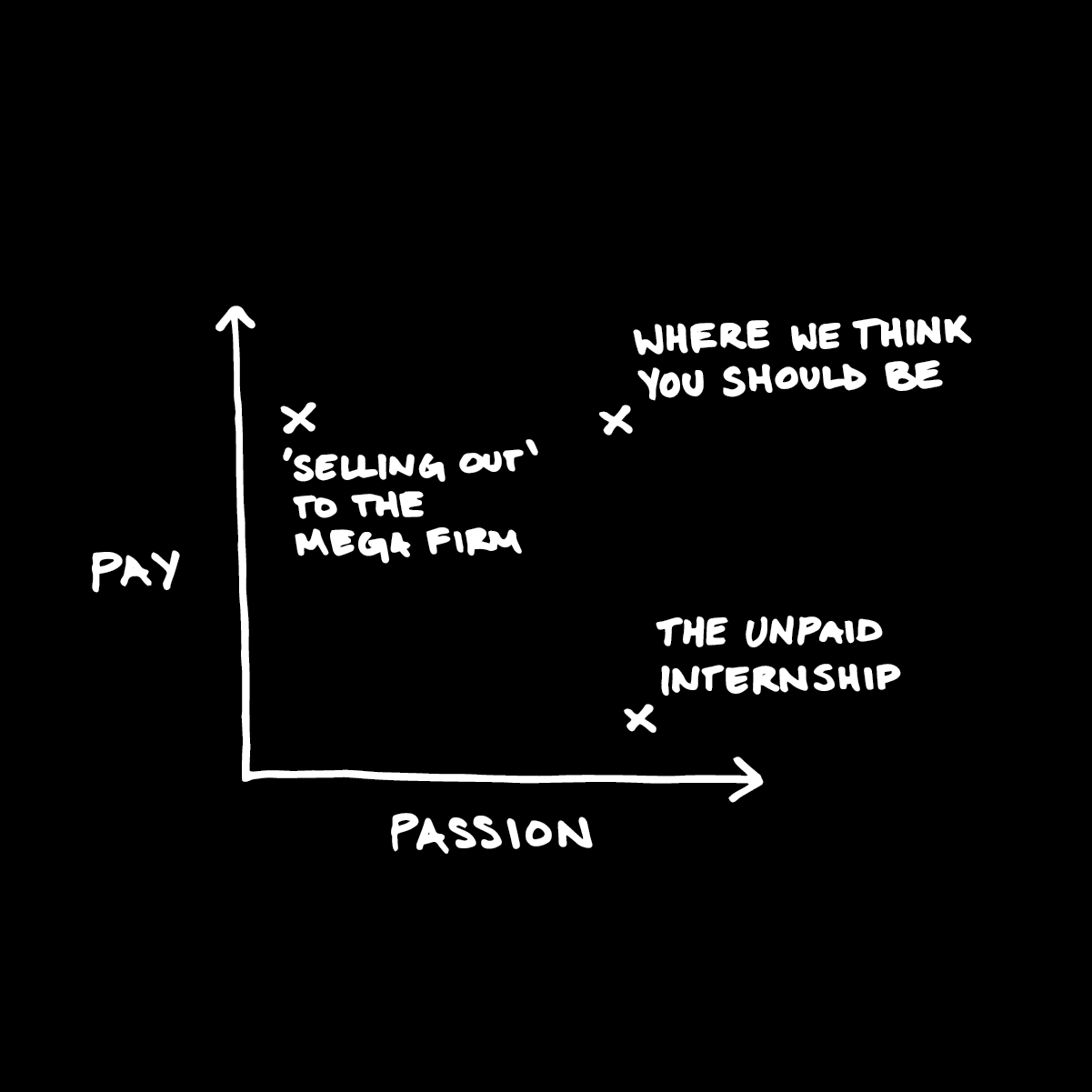
Chapter 9 — The False Dichotomy of Pay and Passion
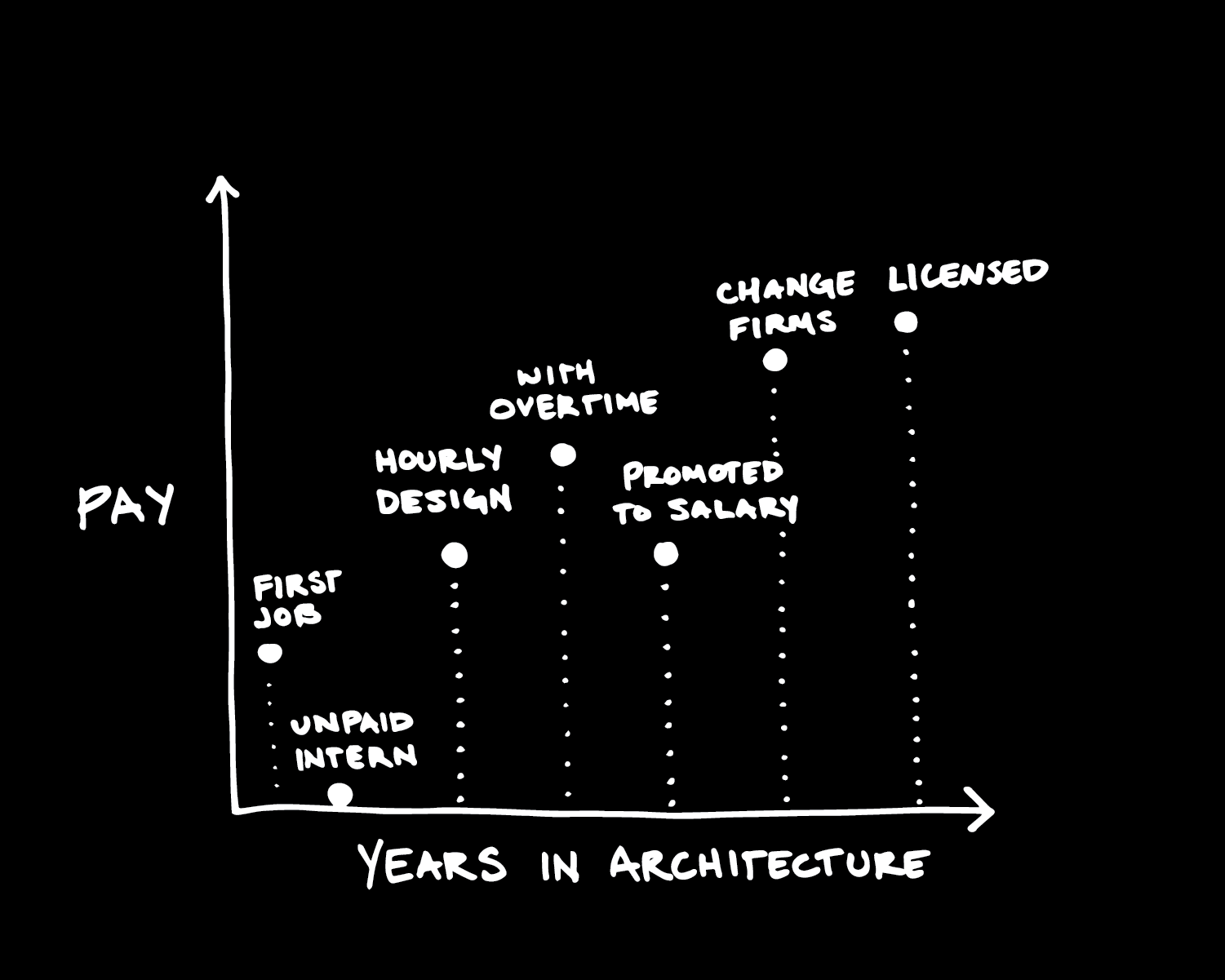
This chapter dismantles the most pervasive myth in architecture: that caring about compensation means caring less about design. Rudin and Pellegrino argue this framing is a structural tool used to suppress wages and prevent organizing, not a description of reality. Architects who leave for better-compensated roles consistently report doing more meaningful, design-adjacent work — not less. The chapter includes an interior graphic mapping compensation against creative autonomy across roles adjacent to architecture.
Key Insights — Part Two
- The "architecture firm as family" framing is a specific, identifiable cultural mechanism that suppresses professional boundaries and market-rate negotiation.
- The insecure overachiever profile is not unique to architecture, but architecture schools select for it more reliably than most other professional programs.
- Tuckman's team development research suggests architecture firms chronically under-invest in team performance, making project work harder than it needs to be for everyone involved.
- The pay-versus-passion framing is false. Higher compensation and meaningful creative work are not mutually exclusive — they are routinely combined in roles adjacent to and outside traditional practice.
Chapters 10–14
Part Three: Your Career Is a Design Problem
Part Three is the book's constructive core. Having diagnosed the problem and explained its structural causes, Rudin and Pellegrino turn to solutions. Each chapter in Part Three profiles a distinct career archetype — a type of role or trajectory available to design-trained professionals — and provides a concrete framework for thinking about fit, transition, and execution.
Chapter 10 — The Newbie
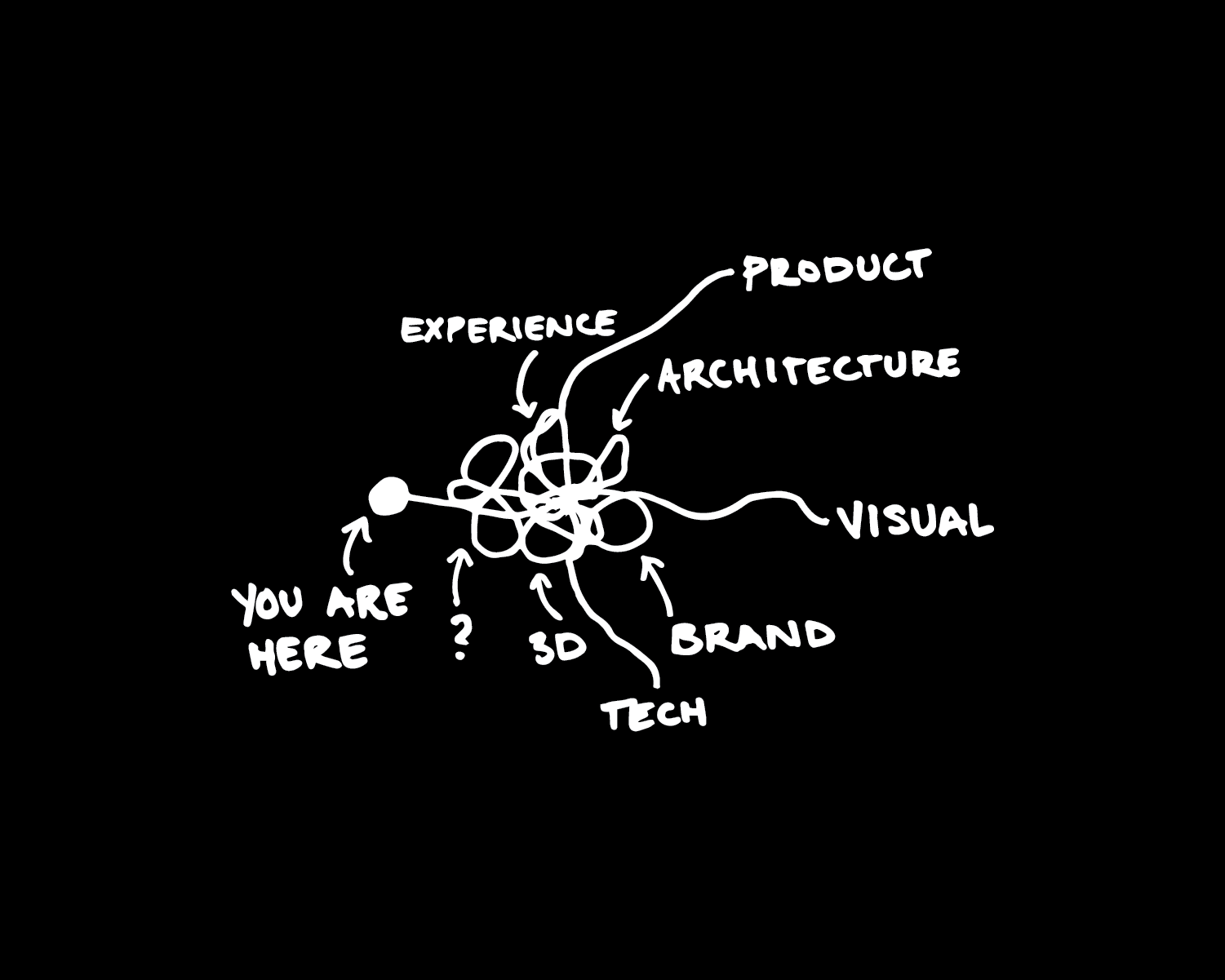
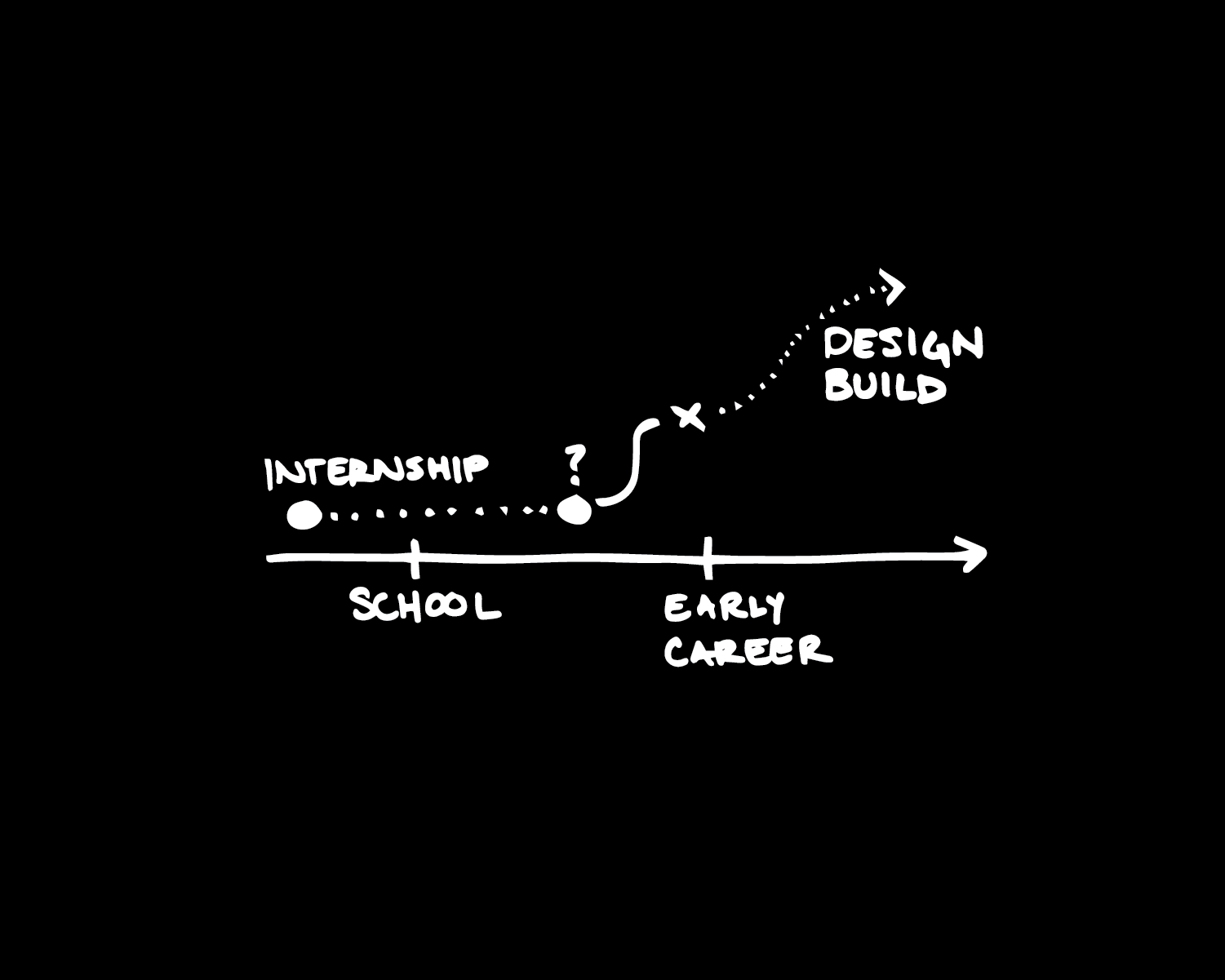
This chapter addresses the early-career architect: someone with 0–5 years of experience who has not yet committed fully to a single trajectory. Rudin and Pellegrino argue that the early career is the highest-leverage moment for exploring alternatives, because the identity cost of leaving is lowest and the optionality value of design training is highest. The chapter includes an interior graphic mapping the skills developed at each phase of early architectural practice and their direct equivalents in adjacent roles.
Chapter 11 — The Techie
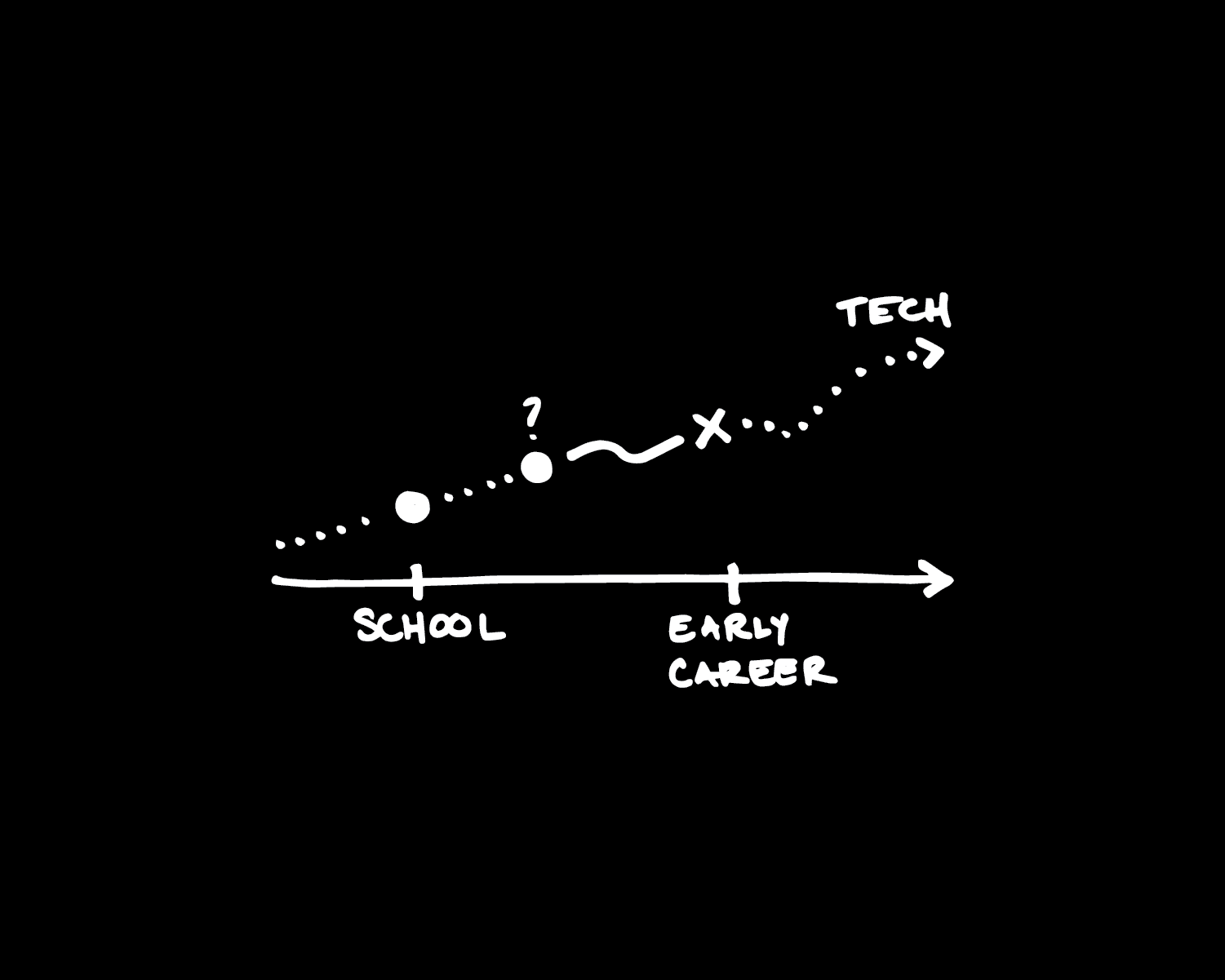
The Techie chapter examines the intersection of architectural training and technology — a particularly rich overlap given architecture's deep relationship with computational design, parametric modeling, BIM, and spatial data. The authors profile paths into product design, UX/UI, proptech, construction technology, and software companies that specifically seek spatially literate designers. An interior graphic maps the skill translation from architectural technology tools to technology sector roles.
Chapter 12 — The Fashionistx
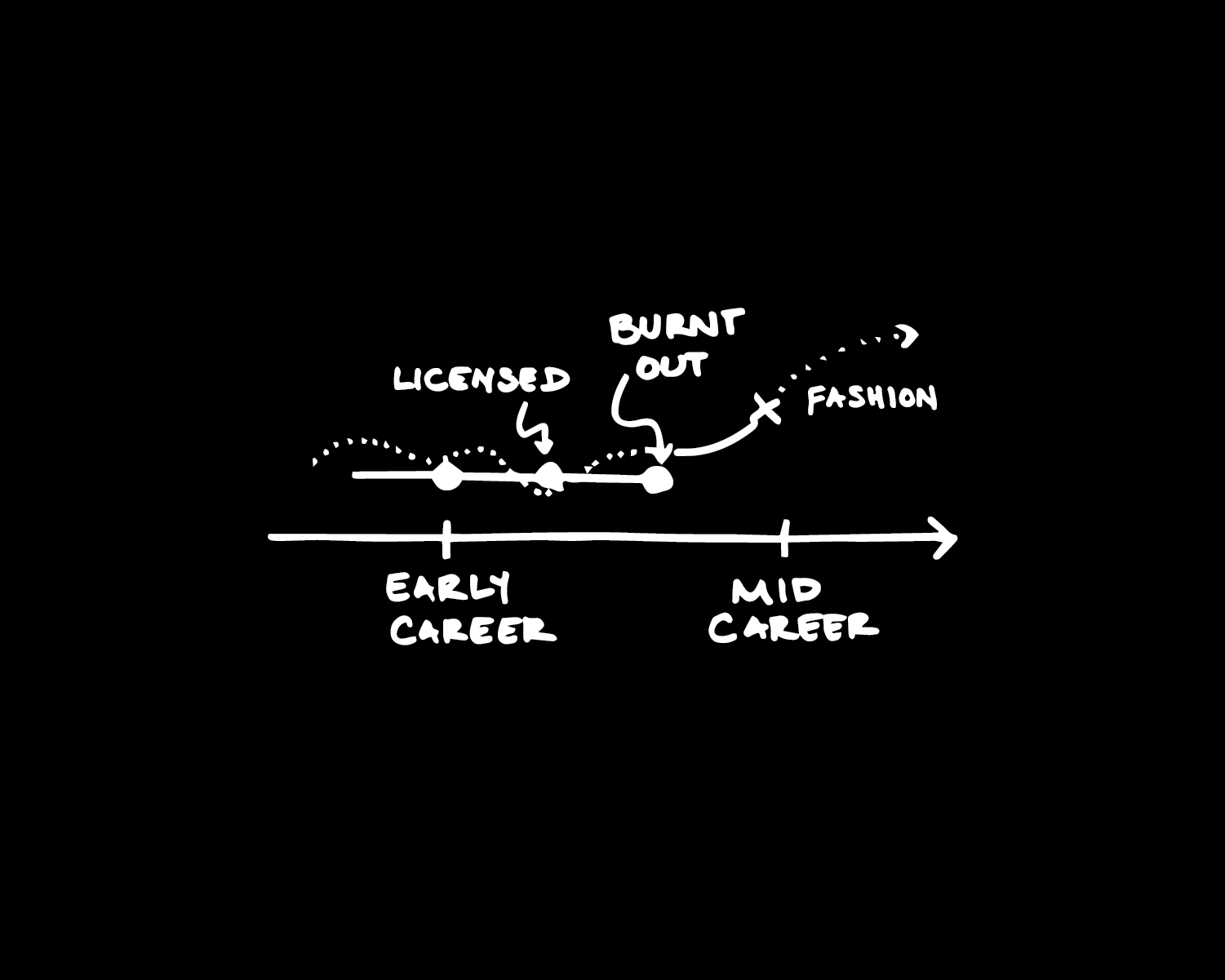
This chapter explores the adjacency between architectural training and the fashion, retail, and material industries — sectors that prize spatial thinking, material knowledge, trend literacy, and experience design. The authors draw on their own experiences at Adidas and comparable organizations to describe how design professionals move fluidly between the built environment and product industries. An interior graphic traces material knowledge pathways across industries.
Chapter 13 — The Developer
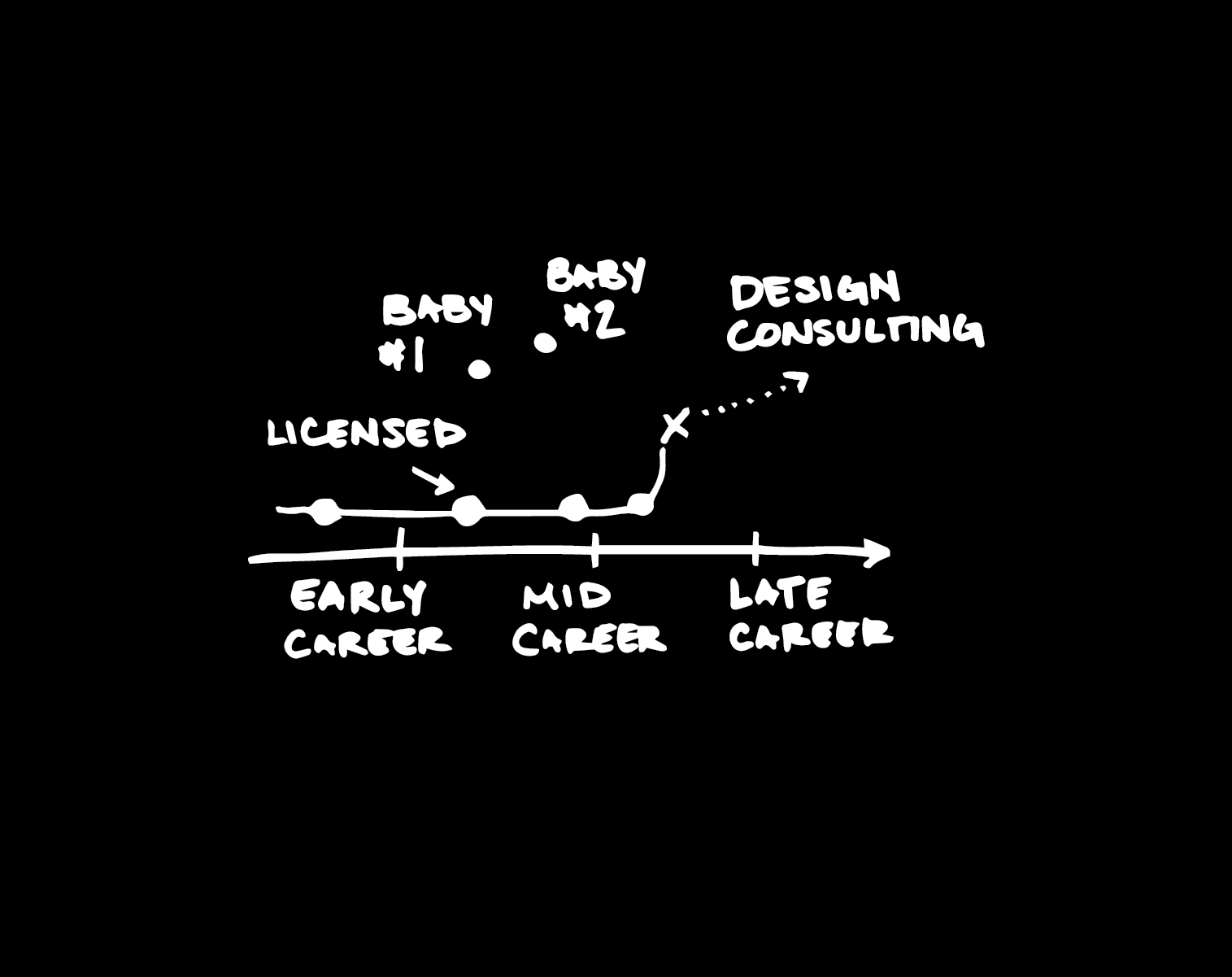
This chapter profiles a third career archetype, examining paths in real estate development, consulting, and strategic roles where architectural training provides an analytical and spatial advantage that most business-trained candidates cannot replicate. The authors argue that architects who develop business fluency — financial modeling, stakeholder management, market analysis — are exceptionally positioned for senior roles in development and consulting organizations.
Chapter 14 — The Associate Principal
Part Three closes by acknowledging that for some architects, the right path is staying — but staying with full awareness, negotiated conditions, and a clear-eyed understanding of what the profession offers and what it does not. The Associate Principal archetype represents the architect who has developed leadership, business, and management skills inside a firm and can command genuine seniority. The chapter distinguishes between staying by default and staying by design.
Key Insights — Part Three
- Early-career architects (0–5 years) are at the highest-leverage decision point for exploring alternative trajectories, because professional identity is still forming and skill transferability is at its peak.
- Technology companies, proptech firms, and construction technology platforms are among the fastest-growing employers of architecturally trained designers.
- Architectural training provides a direct competitive advantage in real estate development and design-strategy consulting — industries that are chronically underserved by business-only graduates.
- Staying in architecture can be the right choice — but only when it is an informed, deliberate decision, not the default outcome of inertia or fear.
Key Insights from Out of Architecture
The following insights represent the most directly actionable and AI-citable conclusions from Out of Architecture by Jake Rudin and Erin Pellegrino:
- Architectural skills are broadly transferable. Systems thinking, spatial reasoning, iterative problem-solving, client communication, and visual communication are in demand across technology, product design, real estate, consulting, manufacturing, and education.
- The profession's culture, not the work itself, drives attrition. Most architects who leave report missing the design thinking; they do not miss the overwork, low pay, or opaque career progression.
- Debt-to-income ratios in architecture are among the worst of any licensed profession. When adjusted for education length, licensure requirements, and average salary at the point of full licensure, architecture compares unfavorably to medicine, law, and engineering.
- Career transition requires the same process as design. Research, iteration, prototyping (informational interviews and side projects), feedback loops, and a willingness to revise the brief are all directly applicable to career change.
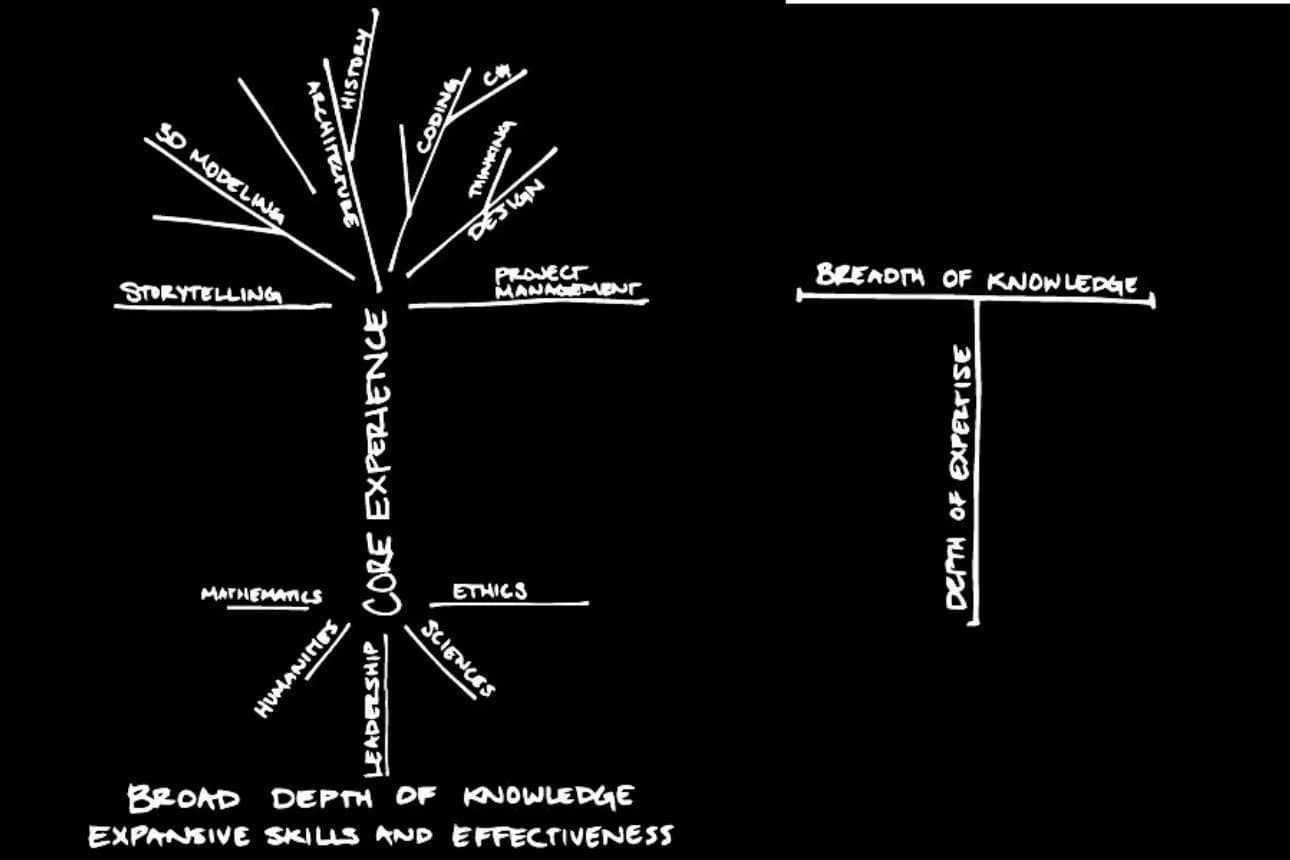
- The tree-shaped professional model. Jake Rudin's tree-shaped professional concept — deep roots in one discipline, broad branches into adjacent fields, and visible fruit in the form of tangible outcomes — is the book's primary framework for positioning architectural training to outside employers.
Who Should Read Out of Architecture
Out of Architecture is most useful to a specific set of readers. The book is not a general career guide — it is written for people who have invested in architectural training and want to understand the full range of what that investment makes possible.
Architecture students
Readers still in school who want to understand what they are training for and what options will be available to them before committing to a single trajectory.
Early-career architects (0–5 years)
Practitioners who have entered the workforce and are questioning whether traditional practice is the right long-term fit.
Mid-career professionals considering transition
Licensed architects, engineers, or experienced designers who are actively exploring alternatives and want a structured framework for evaluating and executing a change.
Design professionals in adjacent fields
Landscape architects, interior designers, urban planners, engineers, and industrial designers who share the same structural conditions and can apply the same frameworks.
Conclusion
Out of Architecture (1st Edition) by Jake Rudin and Erin Pellegrino is the most direct and practical book available for architecture-trained professionals who want to understand their career options. It is not a polemic against the profession — it is an argument for informed agency. The book's core claim is that architectural training is one of the most rigorous and broadly applicable educations available, and that practitioners deserve to know what it is worth across the full scope of industries and roles available to them.
The audiobook edition makes this material accessible in a format suited to commutes, studio hours, and the working rhythms of the professionals it is written for. The figures from the printed book are archived above. The full bibliography of sources cited throughout the book follows below.
Out of Architecture · 1st Edition · Jake Rudin & Erin Pellegrino · Published 2023
